Friday, December 31, 2021

Ranking Every Ken Burns Film


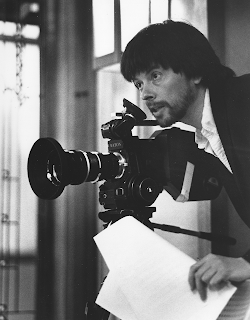
In 2021, I watched all 31 documentaries directed by filmmaker and holder of America's worst haircut Ken Burns, hundreds of hours devoted to telling the American story. Here, from best to worst, is my ranking of those 31 films:

1. The Vietnam War

An absolute masterpiece from beginning to end. Featuring accounts from living veterans along with Burns’ traditional use of primary sources, this doc is as emotional as it is informative, and a must-watch for any student of American history. It’s no stretch to say this is Burns’ opus.

2. Baseball

The only surprise, I imagine, is that I didn’t rank this #1. It’s a loving tribute to America’s pastime, and if it’s overly sentimental in places, well, Brad Pitt said it best in Moneyball: “How can you not be romantic about baseball?” The addition of the “10th Inning” episodes in 2010 was unnecessary but fine.

3. Country Music

A riveting series on a genre of music about which I’m shockingly ignorant. I loved this one so much that it inspired a New Year’s resolution to listen to more country music in 2022.

4. The Address

This one was a big departure from the Ken Burns formula, telling the story of a special needs school in New York in which students are challenged to learn the Gettysburg Address before graduation. Normally you go into a Ken Burns film knowing it may be a little dry; in this case, I was moved to tears.

5. The National Parks: America’s Best Idea

I have a soft spot for this one, which I’ve seen three times now. Objectively, this film’s probably too long and too loosely focused. But every time I hear that score, see those nature scenes, and hear actor Lee Stetson’s Scottish brogue as he recites John Muir quotes, I’m transported.

6. The Central Park Five

More aggressive in style and activist in tone than the typical Burns doc (this one was co-directed by Sarah Burns and David McMahon), it is also one of the most striking. Telling the story of the infamous  Central Park jogger rape and subsequent arrest, trial, and conviction of five teenagers of color, it ends with a mixture of tragedy and triumph as the convictions are vacated following a prison confession by the actual rapist. Consider this a companion piece to Ava DuVernay’s dramatic limited series When They See Us.

7. Unforgiveable Blackness: The Rise and Fall of Jack Johnson

Films like these are why I love Ken Burns docs: I went in knowing a little about Johnson, the first black heavyweight champion of the world, and left with more knowledge and a wider perspective on not only Johnson, but sports, race, and America’s relationship with the two. A truly excellent documentary from beginning to end.

8. Muhammad Ali

The most recent of his documentaries, this one did an excellent job balancing Ali’s boxing prowess with his social impact. Anybody interested in the Greatest—and who isn’t—will appreciate this one.

9. The Roosevelts

An examination of three American icons: Theodore, Franklin, and Eleanor Roosevelt. It does an admirable job balancing time between the three, though I would have loved more on Eleanor.

10. The Civil War

The 9-part classic that made Burns a household name, I have to regretfully say that this one hasn’t aged well—too much whataboutism and too little input from people of color give this film the unfortunate takeaway that the war was caused by a failure to compromise instead of, you know, slavery. Nevertheless, all the Ken Burns hallmarks that are now so familiar they are borderline caricature—narration through the reading of letters, slow panning over black and white photos, etc.—really get their start here, and if you watch the whole film you’ll learn a lot, not just about the war but about the nation.

11. The War

The film warns you up front that World War II is too sprawling a story to tell, so it does so through the lens of the war’s impact on five different American towns. It makes for an intentionally narrow but remarkably impactful way to chronicle the war. Parts of the war’s story get missed along the way, but it was a risk worth taking.

12. Jackie Robinson

While the section dealing with Robinson’s career is largely a retread of the sixth (and best) episode of Baseball, the part of this documentary dealing with Robinson’s life post-baseball is fascinating and largely untold.

13. Mark Twain

I was amazed by how much I enjoyed this one. I suppose it’s a testament to Twain’s enduring appeal that, more than 100 years after his death, Mark Twain can continue to entertain.

14. Prohibition

My biggest takeaway from this three-parter was that, while Prohibition is now rightfully seen as a terrible constitutional experiment, it was an understandable one. With surprising efficiency (Burns, much like Peter Jackson, is not known for his willingness to make cuts), Burns tells the story of alcohol become a scourge in American life, how activists managed to enact a constitutional amendment, and how within years it became a laughingstock. Worth a watch for anyone who, like me, didn’t know much about the subject matter going in.

15. Thomas Jefferson

One of Burns’ better biographical films, owing partly to the fascinating subject matter. This one is definitely a paint-by-numbers educational doc, but I didn’t mind so much thanks to all the interesting tidbits I picked up about this Founding Father. Bonus points to Burns for spending time talking about Jefferson’s relationship with Sally Hemmings, still a controversial topic in 1997.

16. Lewis & Clark: The Journey of the Corps of Discovery

I was pleasantly surprised by how much I enjoyed this film, one of the ones I was least looking forward to when I began this project. Burns’ account of the Corps of Discovery’s quest to map out the uncharted land acquired in the Louisiana Purchase is revelatory and even thrilling at times.

17. Jazz

Look, I really wanted to like this. But jazz is one of those things that I admire more than I enjoy, and 19 hours is a lot of time to spend learning about something you don’t truly love. Also, this needed more talking heads…Wynton Marsalis was great, but the amount of screen time he was given made it seem like Burns just didn’t know that many jazz musicians.

18. Not for Ourselves Alone: The Story of Elizabeth Cady Stanton & Susan B. Anthony

Burns’ account of the women’s suffrage movement understandably focuses in on its two most famous leaders, but one can’t help but wonder what parts of the movement’s story were lost because of that decision. Nevertheless, is biography always more interesting than straight history, and I learned a lot about a subject we don’t discuss nearly enough.

19. Hemingway

A by-the-numbers biographical doc of arguably America’s most famous writer. I enjoyed it and learned a lot, but I can’t say Burns took any risks with this one.

20. Frank Lloyd Wright

Aided greatly by panning shot after panning shot of Wright’s most famous architectural feats, this is one of the docs from which I learned the most, owing both to my lack of knowledge going in and Burns’ storytelling. Definitely a film you need to watch, not just listen to while doing other things, it’s an interesting account of an interesting man.

21. The Shakers

Best known for their hand-crafted furniture, the Shakers get the Ken Burns treatment here in his second offering for PBS. Not the most compelling subject, and Burns’ style is still in its for-educational-purposes-only stage, but I enjoyed this one nevertheless.

22. Huey Long

A compelling if cursory account of an American political legend. The film’s highlight is definitely the filmed accounts of some veeeeery Cajun Louisianians telling about their encounters with Long.

23. The Congress

An ode to a broken branch of government, this documentary probably worked a lot better when it debuted in 1988 than it does today. Its focus on the history of Congress is good educational TV; its attempts to inspire fall on deaf ears in the 21st century.

24. The Dust Bowl

The Dust Bowl is one of those national tragedies I’ve never been able to get interested in. This documentary, I’m sorry to say, did not change that. Someday a gifted storyteller will manage to rouse me with stories of poverty-stricken Okies…but Ken Burns, it turns out, was not that storyteller. Your move, John Steinbeck.

25. Thomas Hart Benton

I knew literally nothing about Benton, the iconoclastic painter of the American experience, before seeing this film. By the time it was over, I knew more but cared about the same amount. Not Burns’ most compelling work.

26. Horatio’s Drive: America’s First Road Trip

A departure from the normal Burns oeuvre of big subjects and historical personalities, this film tells the story of a cross-country automobile road trip, the first of its kind, undertaken in 1903. I wanted to like this more than I did, and I’m not sure there was ultimately enough “there” there to warrant a 2-hour documentary.

27. Defying the Nazis: The Sharps’ War

Burns’ answer to Schindler’s List, this tells the story of one couple’s efforts to help refugees escape Nazi-occupied Europe. Not really my cup of tea, it will likely have appeal to fans of the History Channel and its inexhaustible appetite for WWII material.

28. The Mayo Clinic: Faith, Hope, Science

A different format from the typical Burns doc, this feels more like a promotional movie than an educational or entertainment film. Nevertheless, it’s a professionally made, informative look at the history and impact of an American institution.

29. Empire of the Air: The Men Who Made Radio

Burns does some interesting things stylistically here—there are lots of times he’ll just play staticky radio with hardly any images—but at the end of the day, this 1992 offering feels like a relic of the pre-Internet days when radio was still a relevant force in American life.

30. The Statue of Liberty

Better than The Brooklyn Bridge by a hair, but suffers from the exact same issues. Treacly when it lingers on the symbolic nature of the statue and dull when it focuses on the history of its construction, this doc is a snoozer.

31. Brooklyn Bridge

His first documentary for PBS, and it shows. He’s still working out the kinks in his style, it’s very dated, and, well, it’s about a bridge. A bridge. If you’re an engineer, maybe you’d be into this. I very much was not.

2021 New Year's Resolutions Scorecard


Every year, I make a lengthy, lofty list of resolutions for the next 12 months: habits I want to form, skills I want to learn, media I want to consume, and goals I want to accomplish. And on December 31, I look back at what I promised myself I'd accomplish and see how close I came.

So without further ado, here's the scorecard for 2021's resolutions!

1. Watch the entire Ken Burns filmography ✔

Every time PBS airs a new Ken Burns doc, I eagerly set aside time to watch it, whether it clocks in at 2 hours or 20. So in 2021, with help from a PBS Documentaries subscription on Amazon Prime (a steal at $4 a month), I endeavored to watch every documentary Burns has ever directed, from 1981's The Brooklyn Bridge to September's Muhammad Ali.

The docs served as the soundtrack to my morning runs all year, and I finished up in mid-December. For those curious, here are my rankings of all 31 films from best to worst.

Score: 1 out of 9

2. Read all my unread books ✔

For nearly 10 years, I've kept a handwritten list of all the books I own.* For a few years now, I've been working my way through that list, trying to buy less than I read and slowly whittle the list down to nothing. In 2021, I strived to finish the job.

And I did it! According to Goodreads, I read 24 books from that list this year (which includes some I purchased during the year), and as of today, the list now has nothing on it that has not been crossed off.

Now, time to go buy more books.

*Disclaimer: I actually have 3 such lists. One is of all the "church books" (theology, church history, biblical commentaries, etc.), one is "comic books" (Essential Marvel volumes, graphic novels, etc.), and the other is everything else (novels, sports, history, biography, etc.) The list I'm referring to here is the "everything else" list.

Score: 2 out of 9

3. Reach out to 5 church members every day

This was a well-intentioned effort to make sure I stayed in contact with my parishioners outside of Sundays, but it didn't prove to be very practical...people get confused by phone calls with no purpose, and the amount of notes and texts I sent dwindled as the year went by.

The good news is that, in failing to meet this goal, I found better ways to accomplish the bigger point. Looking forward to implementing a few less rigid ways of staying in contact with my congregation in 2022.

Score: 2 out of 9

4. Read through the Bible with Lindsey ✔

Admittedly, the "with Lindsey" part faded as the year went on; we both read our passage every day, but our check-ins on what we'd read became less and less frequent, especially when one of us fell behind for a few days.

Nevertheless, we both read every verse of the Bible in 2021; this was my fourth read-through and her second. I have a different plan for my morning devotional time in 2022, check in tomorrow to see what's in store.

Score: 3 out of 9

5. Pay off our SUV ✔

Lindsey and I agreed at the end of 2020 to start attacking our car payment with the kind of fervor even Dave Ramsey would appreciate, applying every dollar of surplus we had each month to our car payment until it was gone.

And on July 2, we finished the job. Both cars (at least until mine gives up the ghost) are now fully paid off.

Score: 4 out of 9

6. Spend 5 hours per week writing (not for work)

One of these days (maybe even 2022!) I'm going to get disciplined about writing. I thought 2021 would be that year.

It was not. Truth be told, I think I'd given up on this by the third week of January. There's only so much time in the day, and I have yet to prioritize writing as part of mine. Disappointing.

Score: 4 out of 9

7. Do something nice for Lindsey every day

Second year in a row I've failed to live up to this one. Ugh.

Now, to clarify, does this mean there were days I was mean to her from 4:30 am to 10:30 pm? No (at least I hope not.) But the idea behind this resolution was to undertake one thoughtful, intentional act of kindness for Lindsey every single day. And with that as the standard, I can't say I was successful.

Score: 4 out of 9

8. Listen to 3 songs per day

Y'all, this one should have been a slam dunk. How hard can it be to find 15 minutes every day to close my eyes, put on headphones, do a few laps of the church, and listen to music?

Pretty hard, apparently. I found time for Ken Burns and podcasts; I didn't always find time for music. Booooo, self.

Score: 4 out of 9

9. Put my phone down

Like almost everyone, I spend too much time on my phone, including when my kids are around and would love my attention. So I resolved in 2021 to keep my phone in my pocket unless I actively needed it for something, to make use of it a choice instead of just a habit.

Did I do better than in 2020? I think so. But not better enough to say I succeeded here. Give me another year and another viewing of The Social Dilemma to see if I can break my bad millenial habit of reaching for my phone every time I'm bored for more than 5 seconds.

Score: 4 out of 9

------------------------------------------

Final Score: 4 out of 9, or 44%. Let's see how that stacks up against previous years:

2018- 8.5 out of 13, or 65%.
2019- 3 out of 13, or 23%.
2020- 5.5 out of 13, or 42%.

So not my best year, but not my worst either. Check back in tomorrow to see what I'm shooting for in 2022!

The Year in Review (Friday Devotional)


I remember the days of old; I meditate on all Your works; I muse on the work of Your hands.

- Psalm 143:5

For various news outlets, entertainment media, websites, and more, today is the last chance for an annual tradition: “the year in review.” Writers hammer out a quick column summarizing what they learned over the year, editors compile lists of their most popular content; even your favorite apps get in the game, with Spotify telling you which songs you listened to the most and Facebook letting you know which of your posts garnered the most feedback. It’s a time for remembering those moments which shaped the year, a time to recall what felt so important then even if it feels like ancient history now.

We do this at a personal level too, whether by flipping through old photos, holding onto family heirlooms, or even just telling stories around the kitchen table. We intuitively understand that the past affects the present and the future, that what has gone by is far from irrelevant to what is and what will be. As William Faulkner famously wrote, “The past is never dead. It’s not even past.”

So as you remember what you did in the last year, I encourage you to also think about what you saw God do. What prayers did you see answered in 2021? How did his Word encourage, convict, counsel, and shape you? How did his church minister to you in times of need?

The wonder of serving a living God is that the stories of his providence aren’t confined to the pages of Scripture—we see him at work in our daily lives. So as you review your year, don’t forget to reflect upon the Lord’s role in it. And by remembering what he has done, may you find your heart prepared for all he has yet to do.

Friday, December 24, 2021

It Was Not a Silent Night (Friday Devotional)


And the Word became flesh and lived among us, and we have seen his glory, the glory as of a father’s only son, full of grace and truth.

- John 1:14

Traditional depictions of the nativity are portraits of serenity—Mary and Joseph kneel stoically on either side of the manger, the animals gather ‘round in a semicircle, an angel hovers above the stable’s perfectly symmetrical roof, and in the middle of it all, the Christ child lays sleeping. All is calm, all is bright.

We do ourselves a disservice when we think of Christ’s birth in that picture-perfect manner. Because Jesus didn’t simply “come into” this world, he was born. In conditions fit only for animals, Mary’s water broke onto a dirt floor. She screamed and pushed, likely for hours, with little idea when relief would come. And when God’s Son entered this world, he emerged shrieking a newborn’s cry, with blood cloaking his skin and with an umbilical cord tying him to his mother until Joseph found a blade sharp enough to cut it.

Details like these, the messy particulars of birth, are as important a part of the story as the angels’ alleluias, because they remind us that the Word became flesh, that Jesus was as human as he was divine. They remind us that his humanity was not a disguise, but reality—he ate, drank, slept, and breathed, just like you and me. And when he ultimately went to the cross, the pain he suffered was real pain, the blood he shed was real blood, the death he died was a real death.

It can be tempting to elevate the stories of Jesus, from the manger to the empty tomb, to an entirely spiritual plain, to lose sight of the fact that these were historical events involving flesh-and-blood people. But to consign Jesus to stained glass, to wash the dirt and the blood from his story, is to ignore part of what makes his story such good news. In Christ, the Word became flesh and lived among us—and while he saw us in all our messiness and fragility, we saw his glory, full of grace and truth.

The Lord knew all the unpleasantness this world had to offer and came anyway, experiencing that unpleasantness firsthand from birth to death. And in resurrection, he gives us a chance for something better—not a silent night, but a joyous eternity.

Monday, December 20, 2021

The Advent of Christ


 "The Advent of Christ"

A world in darkness, cloaked in sin

A cry for justice: when God, when?

But now salvation can begin

The Lord is coming soon.


The day has come, God does not tarry

The angel Gabriel comes to Mary

The Son of God, this girl shall carry

The Lord is coming soon.


The news to Joseph is the same,

the child to come will bring no shame.

Immanuel will be his name

The Lord is coming soon.


To Bethlehem the couple goes

King David’s town, as Joseph knows

This is the place the Father chose

The Lord is coming soon.


When they arrive, there is no room

The relief of arrival gives way to gloom

But the child kicks in Mary’s womb

The Lord is coming soon.


They’re told a stable’s up ahead

A place where animals are fed

A manger will be the Christ’s first bed

The Lord is coming soon.


Clutching her belly, Mary cries out

With fear and joy, Joseph gives a shout

This is the moment it was all about

The Lord is coming soon.


Gentle and lowly, the Savior comes.

Loudly and slowly, the Savior comes.

Glorious and holy, the Savior comes.

A cry—

God is with us now.


After the birth comes the baptism.

After the baptism comes the ministry.

After the ministry comes the betrayal.

After the betrayal comes the crucifixion.

After the crucifixion comes the resurrection.

After the resurrection comes the ascension.

After the ascension comes the church.


And now, we wait in the strange in-between space, this interim between Advents.

The kingdom has come, but by faith and not yet by sight.

Darkness is overcome, but not yet swallowed up.

Death is defeated, but is with us still.


But someday soon:

Someday soon Christ will descend

Someday soon our wounds he’ll mend

Someday soon our sorrows will end

And heaven will triumph over hell

A greater love no tongue can tell

And we will see Immanuel

And we will sing a new Noel

And praise the Lord, all will be well.

The Lord is coming soon.

Friday, December 17, 2021

Finding Joy (Friday Devotional)


Rejoice in the Lord always; again I will say, Rejoice.

- Philippians 4:4

Over the course of his career, writer and professor Joseph Campbell gave the same advice to anyone who would listen, advice that became something of a New Age mantra: “follow your bliss.” What Campbell was urging people to do was consider what they were most passionate about, the things which brought them the most personal fulfillment and happiness, and then devote themselves to pursuing them. By seeking those things—whether fame or success, money or popularity—Campbell said that happiness would be found, not just in the achievement of those things, but in the effort to attain them.

Campbell’s advice has resonated with people for generations now, from college students to artists to CEOs. In our world, happiness—bliss—is something you chase after, something you work towards, something you earn. It is the reward for your efforts, the fruit of your labors.

But the truth is that, like all fruit, it goes bad after a while. The bliss you seek is fleeting. Happiness, as Mad Men’s Don Draper once said, is just a moment before you need more happiness.

While following your bliss can lead to temporary pleasure, eternal joy is not found in something you can earn, achieve, build, or buy. In fact, it’s not found in something at all. Because though happiness can be found in things, joy is found in the person of Jesus Christ.

It’s in Jesus that we are shown the glory of God, full of grace and truth. It’s by Jesus that we are led to the Father and given the gift of the Spirit. It’s through Jesus that we are forgiven, saved, redeemed, and restored. Jesus is the source of our hope, the key to our peace, and the reason for our joy.

When you search for joy in the things of this world, you may find fleeting pleasure, but you’ll miss out on something better. So don’t settle for following your bliss—follow your Lord instead, where joy is found.

Friday, December 10, 2021

Searching for Peace (Friday Devotional)


The wolf shall live with the lamb, the leopard shall lie down with the kid, the calf and the lion and the fatling together, and a little child shall lead them. 

- Isaiah 11:6

Peace—real, lasting shalom—is almost impossible to attain in our world. Maybe you can manage to stop fighting, but bad feelings will probably continue to linger. Maybe you can achieve a pause in your struggles, a break from the almost constant stream of difficulties, but eventually a new trial will rear its head. Maybe you’ll even reach a state of stillness and rest, a retreat from anxiety—but inevitably life will come crashing back in with its interruptions and stresses and busyness.

Peace is simply unnatural in our fallen world. Our systems aren’t set up to benefit everyone, just a select few, because that’s how we’ve designed them. Our relationships are too often marred by strife when a dose of humility would set things right. Given chance after chance to set pride aside in the name of cooperation, we choose selfishness and hostility.

But despite our inability to attain peace, despite our refusal to make the necessary efforts to achieve it, we still long for it. We want something better than endless conflict and struggle and stress. We want a life marked by grace instead of judgment, forgiveness instead of slander. We know there has to be a better way.

God began to show us that way when he sent the Kings of Kings to this world, not as a conquering warrior or a wealthy lord, but as a peasant girl’s baby, laid in a humble manger. God began to show us peace when that baby grew into a man who blessed the poor instead of subjugating them, who healed the sick instead of bullying them, who loved sinners instead of judging them. God showed us peace when that same Jesus chose crucifixion instead of combat, the cross instead of the sword, a sacrificial death instead of a bloody revolution.

Our world is not what it was meant to be. But in Christ, God has ushered in something better, a life that someday the whole world will see. That life is found in the Prince of Peace. O come, let us adore him.